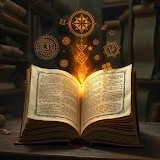

Norse Mythology: Gods, Runes and the End of the World
Discover Norse mythology: the nine worlds and Yggdrasil, gods like Odin, Thor and Loki, the runes, and the inevitable Ragnarök.

World history is shaped by civilizations that left a deep mark on the development of humanity. Among them, few have had an impact as lasting and fascinating as Ancient China. In the fertile valleys of the Yellow River and the Yangtze, cultures emerged that gave rise to one of the most influential societies on the planet.
Within that millennial legacy, the Shang (1600–1046 BC) and Zhou (1046–256 BC) dynasties hold a fundamental place. They not only consolidated political and social organization, but also introduced technological innovations, religious beliefs, and philosophies that still resonate in modern China.
📺 Here you can watch the full video on my YouTube channel, where we explore these two fascinating dynasties in greater detail:
Ancient China developed around the Huang He (Yellow) and Yangtze rivers, considered the cradles of its civilization. These rivers not only provided water for agriculture, but also fertile lands that allowed stable villages to grow.
Farming millet and later rice transformed life in the first settlements, allowing ever-larger populations to grow. Over time, those villages became kingdoms that established social hierarchies, trade, and power structures.
The natural landscape —mountains, deserts, and seas— largely isolated China from the rest of the world, which favored the development of a unique culture deeply rooted in its own territory.

The Shang dynasty was the first to leave solid historical records thanks to archaeology. Its findings, especially the oracle bones engraved with primitive characters, let us learn about its beliefs, rituals, and political organization.
Among its great contributions are:
Shang society was strongly hierarchical, with a warrior nobility, specialized artisans, and peasants who sustained the economic base.

One of the most influential legacies of ancient China was the Mandate of Heaven (Tianming), a concept introduced by the Zhou to justify the fall of the Shang.
The Mandate of Heaven established that:
This political principle not only legitimized changes of dynasty, but also introduced a revolutionary idea: rulers had an obligation to serve the well-being of their people.
The Mandate of Heaven was the foundation of Chinese politics for more than two millennia, influencing even the rise and fall of later dynasties.

After the fall of the Shang, the Zhou established themselves as the longest-lasting dynasty in Chinese history, ruling for nearly 800 years.
During this long period, profound transformations took place:
Over time, however, central power weakened and the feudal states began to act independently, leading to constant wars. This context of instability was also the breeding ground for the emergence of great philosophical currents.

The Zhou period, especially during the Warring States era, was a fertile time for philosophical thought. Among the most notable thinkers are:
This period of great intellectual diversity consolidated China as a civilization advanced not only materially but also spiritually and philosophically.

Both the Shang and the Zhou contributed developments that defined Chinese history:
These advances not only strengthened their society but also consolidated a cultural identity that endures today.

The impact of these dynasties is still felt today:
In contemporary China, where tradition and modernity coexist, it is impossible not to recognize the influence of the foundations laid during these dynasties.

The Shang and Zhou dynasties are not just chapters of the past. They represent the foundations of one of the most influential cultures in history. Studying them helps us understand:
In a globalized world, knowing these roots not only connects us with history but also helps us understand the importance of China in the present and the future.
👉 If you want to keep exploring the history of great civilizations, I invite you to visit our history playlist on my YouTube channel:
Discover Norse mythology: the nine worlds and Yggdrasil, gods like Odin, Thor and Loki, the runes, and the inevitable Ragnarök.

Imagine waking one morning to find the world as you know it has ceased to exist.

A world without written laws: how Hammurabi's 282 laws shaped justice, order and human rights for millennia.