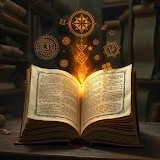

Norse Mythology: Gods, Runes and the End of the World
Discover Norse mythology: the nine worlds and Yggdrasil, gods like Odin, Thor and Loki, the runes, and the inevitable Ragnarök.

High in the Andes, where the air grows thin and the mountains touch the sky, one of the most extraordinary civilizations that has ever existed flourished. The Incas not only conquered one of the most inhospitable terrains on the planet, but also built an empire that stretched more than 4,000 kilometers, uniting peoples, cultures, and traditions under an administration so sophisticated that it still commands admiration today. Their history is not just a tale of the past; it is a living testament to what humanity can achieve when it combines ingenuity, organization, and a deep connection with nature.
When we think of ancient civilizations, our minds usually travel to Egypt, Rome, or Greece. Yet in the heart of South America, the Incas built an empire that rivaled any power of the ancient world in complexity and grandeur. From Colombia to Chile, from the Amazon jungles to the Pacific coast, Tawantinsuyu—as they called their empire—represented a political, military, and cultural feat without precedent on the American continent.
To better visualize the scale of this civilization, I invite you to watch this complete video that masterfully sums up Inca history in just 5 minutes.
Every great civilization is born from a founding story that gives meaning to its existence. The Incas were no exception. According to Andean mythology, Manco Cápac and Mama Ocllo, children of the sun god (Inti), emerged from the waters of Lake Titicaca with a divine mission: to find the place where a golden staff would sink completely into the earth. That place would be the navel of the world, the center of a new empire. After a long pilgrimage, they arrived at the fertile valley of Cusco, where the staff sank without resistance. There they founded the sacred city that would become the heart of Tawantinsuyu.

But beyond the myth, the archaeological record reveals that the Incas were initially a small ethnic group living in the Cusco valley around the 13th century AD. For generations, they coexisted with other Andean chiefdoms, often in situations of subordination or alliance. It was not until the reign of Pachacútec, the ninth Inca ruler, that a radical transformation took place. Under his visionary leadership in the 15th century, the Incas went from being a small regional kingdom to becoming the dominant force in the Andes.
Pachacútec was not only a brilliant conqueror; he was a reformer who understood that an empire needs more than armies. He completely reorganized the administrative structure, implemented the mitimaes system (colonists relocated to consolidate conquered territories), and established the imperial cult that legitimized the power of the Sapa Inca as the direct son of the Sun. This combination of military force, political shrewdness, and spiritual vision laid the foundations of what would become the largest empire in pre-Columbian America.
The expansion of the Inca Empire was as rapid as it was astonishing. In less than a century, the Incas achieved what took other civilizations millennia: unifying under a single government a territory stretching from southern Colombia to central Chile, and from the Pacific coast to the foothills of the Amazon jungle. We are talking about roughly two million square kilometers of territory and a population estimated at between 10 and 12 million inhabitants.

How did the Incas achieve this vertiginous expansion? The answer combines military strategy, intelligent diplomacy, and an extraordinary capacity for cultural integration. Unlike other conquerors who simply subdued and exploited, the Incas developed a system of incorporation that respected many local customs while imposing key elements of their administration.
The Inca expansion strategy was multifaceted. First they sent emissaries to neighboring peoples offering the benefits of joining the empire: military protection, access to the network of state storehouses (colcas) in times of famine, and participation in the prosperous Inca redistributive economy. If the offer was rejected, then the armies arrived. But even after military conquest, the Incas showed remarkable flexibility: they allowed local leaders (curacas) to retain a degree of authority, as long as they accepted the rule of the Sapa Inca and took part in the tributary system.
This system of flexible domination was key to maintaining the cohesion of such a vast and diverse empire. The Incas understood something fundamental: that a sustainable empire is not built with swords alone, but with roads, storehouses, competent administrators, and a shared ideology. Each conquered territory was integrated into the complex administrative network of Tawantinsuyu, divided into the four main regions (suyos) that converged on Cusco, the imperial capital.
If anything set the Incas apart from other ancient civilizations, it was their extraordinary organizational capacity. The Inca Empire was not simply a collection of conquered territories; it was a perfectly oiled administrative machine in which every person had a specific role and where reciprocity was the fundamental principle governing all social relations.
At the top of this social pyramid stood the Sapa Inca, considered the son of the Sun and absolute ruler. His power was theoretically unlimited, but in practice it was tempered by a complex system of councils and by the need to maintain the balance of ayni (reciprocity). Below the Sapa Inca was the nobility of blood (royal panacas), made up of the descendants of previous emperors, who held the highest administrative positions.

The nobility of privilege included local curacas and those who had been elevated for special merits, particularly in military campaigns. These nobles administered the provinces and served as intermediaries between the central government in Cusco and the local communities. Then came the yanaconas, perpetual servants of the nobility who had been separated from their communities of origin, and the mitimaes, colonists who were strategically relocated to settle new lands or to dilute resistance in recently conquered territories.
But the vast majority of the population consisted of the hatun runa, the common people organized into ayllus. The ayllu was the basic unit of Inca society: a group of families that shared ties of kinship, communal lands, and mutual obligations. Each ayllu had its own lands, which were divided into three categories: the lands of the Inca (whose produce went to the state), the lands of the Sun (which sustained religious worship), and the lands of the ayllu (whose production fed the families).
This system operated through the mita, a system of obligatory rotating labor that all adults owed to the state. Through the mita, the Incas built their impressive public works: roads, bridges, agricultural terraces, fortresses, and temples. But the mita was not seen as slavery; it was part of the system of reciprocity: the people worked for the Inca, and the Inca guaranteed protection, food in times of scarcity, and the cosmic order that ensured good harvests.
The Incas also developed a sophisticated accounting system without alphabetic writing. They used quipus, complex systems of knotted cords of different colors and lengths that recorded numerical and possibly narrative information. The quipucamayocs, specialists in the use of these instruments, could keep detailed records of population, tributes, stored harvests, and other crucial administrative data.
When we speak of the achievements of the Incas, it is impossible not to marvel at their engineering feats. In a territory dominated by dizzying mountains, deep valleys, and seismic terrain, the Incas created infrastructure that has not only survived five centuries of earthquakes and erosion, but in many cases remains functional and surpasses modern construction in durability.

No structure better symbolizes Inca architectural genius than Machu Picchu. Built in the 15th century during the reign of Pachacútec, this citadel stands at 2,430 meters above sea level, perched between two mountain peaks above the Urubamba River. Its location was no accident: Machu Picchu was probably a royal residence and ceremonial center that also served as an astronomical observatory.
What is most astonishing about Machu Picchu is not only its aesthetic beauty, but the extraordinary engineering that made its construction and survival possible. The Incas designed a complex drainage system with more than 100 channels to handle the region’s intense rains. The agricultural terraces not only produced food, but also served as a containment system to prevent landslides. The buildings were constructed using the ashlar technique, stone blocks carved with such precision that they fit together perfectly without the need for mortar, creating earthquake-resistant structures that have withstood countless tremors.
The Qhapaq Ñan: The Road System That United an Empire
But perhaps the most impressive engineering achievement of the Incas was not a single building, but a network: the Qhapaq Ñan, or Inca Road. This road system stretched for more than 40,000 kilometers, connecting the entire empire from Quito to Santiago, crossing deserts, jungles, mountains, and coasts.
The Qhapaq Ñan was not simply a road; it was a masterpiece of engineering adapted to every type of terrain. In the mountains, it included stairways carved into living rock, tunnels through cliffs, and hanging bridges of vegetable fiber that crossed deep abysses. In the coastal deserts, the roads were marked with wooden posts. In jungle areas, raised causeways protected travelers from floods.
Along these roads were distributed tambos, resting stations spaced at intervals of a day’s travel, where official travelers could find lodging, food, and fresh pack llamas. The system also included the chasquis, messengers who ran in relays carrying information across the empire. A message could travel the 2,000 kilometers between Cusco and Quito in just five days, a speed of communication that would not be surpassed in that region until the arrival of the telegraph in the 19th century.
The Incas transformed the steep Andean slopes into productive farmland by building andenes, or terraces. These structures not only expanded arable land, but also created microclimates that made it possible to grow different crops at different altitudes. The terraces included sophisticated irrigation systems that distributed water efficiently, and their retaining walls protected the soil from erosion.
In places such as the Sacred Valley, Moray, and Pisac, Inca terraces are still used by local farmers, a testament to their durability and superior design. Modern researchers have calculated that the Inca terraces increased the available arable land by approximately 40%, a fundamental feat for feeding a population of millions on such challenging terrain.
In 1532, the Inca Empire was at the height of its power, but also in the midst of a devastating crisis. The death of the emperor Huayna Cápac from an epidemic (probably smallpox, brought by the Europeans even though they had not yet reached Peru) had unleashed a civil war between his sons Huáscar and Atahualpa. This conflict fatally weakened the empire just as Francisco Pizarro and his 168 Spanish conquistadors were landing on the northern coast.

The encounter at Cajamarca on November 16, 1532, changed the course of American history. Atahualpa, confident after his recent victory over Huáscar, agreed to meet with the Spaniards. What followed was a brutal ambush: the Spaniards captured the emperor, massacred thousands of his unarmed attendants, and, despite receiving a legendary ransom in gold and silver that filled a room, executed Atahualpa.
How could so few Spaniards conquer an empire of millions? The answer is complex. Firearms, horses, and steel armor gave the Spaniards important tactical advantages, but they were not decisive. More crucial was the context of the Inca civil war and the Spanish strategy of exploiting internal divisions, allying with peoples who resented Inca rule. But the most lethal weapon was invisible: European diseases such as smallpox, measles, and typhus, against which the peoples of the Americas had no immunity. These epidemics killed millions, collapsing the social and economic structure of the empire before many regions had even seen a Spaniard.
Although the Inca Empire fell in the 16th century, its legacy never disappeared. Today, millions of people in Peru, Bolivia, Ecuador, and other Andean countries speak Quechua, the language of the empire. Rural communities still practice ayni and mita in their traditional forms. Inca agricultural techniques, especially terrace farming and water management, are being rediscovered by modern agronomists as sustainable solutions for mountain agriculture.

Machu Picchu receives millions of visitors every year, becoming not only South America’s main tourist attraction, but a symbol of human ingenuity and harmony with nature. The Qhapaq Ñan has been declared a UNESCO World Heritage Site, recognizing its value as one of the greatest civil engineering works of all time.
But perhaps the deepest legacy of the Incas is not in their stones, but in their philosophy. The concepts of ayni (reciprocity), minka (community work), and the sacred relationship with the Pachamama (Mother Earth) remain fundamental in the Andean worldview. In a world facing crises of sustainability, climate change, and inequality, many are turning their gaze back to the Inca principles of balance, redistribution, and careful management of natural resources.
The Incas remind us that great civilizations are measured not only by their military conquests or their impressive monuments, but by their ability to create systems that care for their people, that respect the land that sustains them, and that build something lasting that transcends generations. Five centuries after the fall of Cusco, the Incas continue to teach us valuable lessons about social organization, sustainable engineering, and the possibility of building great things when we work together.
In less than a century, the Incas built an empire that defied the most hostile geography on the planet. They united diverse peoples under a sophisticated administration, created architectural marvels that still defy our understanding, and developed agricultural and resource-management systems that are being rediscovered as models of sustainability. Although their empire fell to European steel and disease, their spirit was never conquered.
Today, when we gaze at the perfectly fitted stones of Sacsayhuamán, when we walk the roads that wind through the Andes, or when we hear Quechua in the markets of Cusco, we are touching something eternal. The Incas are not just history; they are a living reminder that human greatness knows no limits when vision, collective work, and respect for the land that sustains us are combined.
The next time you admire a photograph of Machu Picchu emerging from the mountain clouds, remember that you are not seeing only ancient ruins. You are seeing the testimony of what we can achieve when we dare to dream big, when we build with future generations in mind, and when we recognize that we are part of something greater than ourselves. The children of the Sun built their civilization to last forever, and in many ways, they succeeded.
Discover Norse mythology: the nine worlds and Yggdrasil, gods like Odin, Thor and Loki, the runes, and the inevitable Ragnarök.

Imagine waking one morning to find the world as you know it has ceased to exist.

A world without written laws: how Hammurabi's 282 laws shaped justice, order and human rights for millennia.