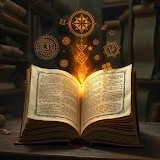

Norse Mythology: Gods, Runes and the End of the World
Discover Norse mythology: the nine worlds and Yggdrasil, gods like Odin, Thor and Loki, the runes, and the inevitable Ragnarök.

When Gabriel García Márquez published One Hundred Years of Solitude in 1967, no one imagined that almost six decades later, this novel would still resonate with the same force in the hearts and minds of readers around the world. Here in 2025, as technology redefines our lives and artificial intelligence transforms the way we consume culture, the saga of the Buendías in Macondo remains vital, powerful, and surprisingly current. What is it about this work that makes it immune to the passage of time? Why do millions of people keep discovering in its pages answers to questions they didn’t even know they had?
The answer isn’t simple, but it is profoundly revealing about human nature and our eternal need to find meaning in chaos. García Márquez didn’t just write a novel; he created a magic mirror in which each generation can see itself reflected, discovering that the ghosts of the past, frustrated dreams, and the tireless search for meaning are universal experiences that transcend eras, geographies, and social contexts.
In an era dominated by viral content, fragmented narratives, and scattered attention, García Márquez’s magical realism offers something contemporary society desperately longs for: a way to process the inexplicable without losing our sanity. The world of 2025 is saturated with paradoxes. We live in the most connected era in history, yet we experience unprecedented levels of loneliness. We have access to infinite information, yet we struggle to tell truth from fiction.
It is precisely in this context that One Hundred Years of Solitude takes on new life. The rain that falls without stopping for four years, eleven months, and two days in Macondo is no more absurd than the endless news cycles that dominate our screens. Remedios the Beauty ascending to heaven while folding sheets seems no more implausible than the viral phenomena that catapult ordinary people to instant fame and then return them to oblivion just as quickly.
García Márquez had a particular gift: he narrated the impossible with the ease of someone describing the weather. This narrative technique has become a tool for psychological survival in our time. When monumental historical events follow one another at dizzying speed—global pandemics, climate crises, technological revolutions—we need a language that can contain the uncontainable. Magical realism teaches us that the only way to stay sane in the face of the surreal is to treat it as an organic part of existence.
Readers in 2025 aren’t surprised when Aureliano Babilonia finally deciphers Melquíades’s parchments and discovers that his fate was written all along. They identify with that revelation because we live in an era where algorithms predict our decisions, where our digital lives are being written in code before we consciously live them. The question that haunts the Buendías—do we have free will, or are we prisoners of predetermined cycles?—is the same one we face when we discover that our social media knows us better than we know ourselves.
One of the most devastating and timely themes of One Hundred Years of Solitude is the repetition of generational mistakes. The Buendías are condemned to repeat destructive patterns: the same stubbornness, the same names, the same forbidden passions, the same solitude. García Márquez built a family that cannot escape its own history, and in 2025, that metaphor resonates with deafening force.
Aren’t we, as a global society, trapped in our own cycles? The wars we swore would never be repeated are emerging again. The economic crises we vowed to prevent are manifesting with barely cosmetic variations. The social movements that seem to revolutionize everything end up facing the same resistance as previous generations.
In the novel, the insomnia that afflicts Macondo comes with progressive amnesia. The inhabitants begin to forget the names of things, the function of objects, the identity of people. To fight this forgetting, they write labels on every object: “This is a table,” “This is for sitting.” The scene, which at the time seemed like a Borgesian fantasy, has become a prophecy about the digital age.
In 2025, we depend on external devices to remember everything: important dates, pending tasks, the faces of old friends. We document every moment so as not to forget it, but paradoxically, we remember less. Our memory has been externalized, and with it, our ability to learn from experience. The Buendías couldn’t remember their history; we remember ours in fragments, in disconnected bits that fail to form a coherent narrative that would allow us to evolve.
The title of the work is no accident. Solitude is not a temporary state in Macondo; it is the essential condition of existence. Each Buendía lives locked in their own psychological prison, incapable of genuinely connecting with others. Úrsula Iguarán may live more than a hundred years and raise multiple generations, but she dies without feeling she truly knew any of her descendants. Colonel Aureliano Buendía wages thirty-two wars and loses them all, but his true defeat is never having managed to communicate what he felt.
This exploration of human solitude has found its most receptive audience precisely now, in a paradoxically hyperconnected era. The statistics are alarming: loneliness rates in Western societies have reached epidemic levels. We have thousands of “friends” on social media but experience a profound lack of authentic intimacy. Like the Buendías, we are physically close but emotionally isolated.
García Márquez understood something fundamental about human nature: loneliness isn’t cured by physical presence, but by genuine understanding. The Buendías talk to each other constantly, but they never listen. They share a roof, but they inhabit parallel universes. This dynamic perfectly describes 21st-century relationships, where we can exchange thousands of messages without saying anything meaningful, where we can be in the same room while each person lives inside their own smartphone.
Aureliano and Amaranta’s inability to consummate their forbidden love, the insurmountable distance between Fernanda and everyone else, the silence that surrounds Rebeca in her self-imposed ostracism: all these solitudes find echoes in our own lives. García Márquez’s genius was showing that loneliness isn’t the absence of company, but the absence of real connection. And that’s a truth that 2025 understands painfully well.
Macondo’s trajectory—from a hopeful founding town to a forgotten ruin—is a microcosm of human history. García Márquez compressed into one hundred years of fiction what humanity has experienced over millennia: founding optimism, the arrival of progress and technology, the corruption of power, foreign exploitation, cyclical violence, decline, and finally, oblivion.
In 2025, as we face climate crises, extreme economic inequality, and geopolitical tensions, the story of Macondo reads as a prophetic warning. The arrival of the railroad and the banana company that promise prosperity but bring exploitation recalls the broken promises of globalization. The massacre of workers that is later erased from official memory anticipates the inconvenient truths our societies prefer to forget.
When García Márquez describes how the banana company transforms Macondo, imposes its rules, extracts its resources, and then disappears leaving devastation behind, he is narrating the history of Latin America. But he is also narrating the history of global capitalism, the gentrification of traditional neighborhoods, the exploitation of personal data by tech corporations that promise to connect us but end up alienating us.
The inhabitants of Macondo never had real control over their destiny. External forces—the government, the company, progress itself—decided for them. In 2025, that sense of powerlessness before systems we don’t control is universal. Algorithms decide what information we see, multinational corporations dictate employment terms, global crises transform our lives without consulting us. Like the people of Macondo, we live the illusion of autonomy while invisible forces write our destiny.
One Hundred Years of Solitude opens with one of the most memorable first lines in literature: “Many years later, as he faced the firing squad, Colonel Aureliano Buendía was to remember that distant afternoon when his father took him to discover ice.” From the very first sentence, García Márquez establishes that time in this novel isn’t linear; it’s circular, recursive, a spiral that returns to itself.
This conception of time resonates deeply with contemporary experience. In the digital age, time has lost its linearity. The past is permanently present in photographs, videos, and posts that resurface without warning. The future collapses into the present through trends we obsessively anticipate. We live simultaneously in multiple temporalities, exactly like the Buendías, who never manage to escape the past or reach a different future.
Melquíades’s parchments contain the entire history of the Buendías written in advance. When they are finally deciphered, they reveal that everything was predetermined. This idea, which might seem fatalistic, takes on new resonance in the age of algorithmic prediction and big data. Our future actions are predicted with unsettling accuracy based on our past behavior. Are we free, or are we simply executing code written by our habits, conditioning, and historical data?
García Márquez suggests that perhaps freedom isn’t in escaping destiny, but in how we face it. The Buendías were destined for solitude, but each generation chose its particular way of living it. In the same way, we may be trapped in systems larger than ourselves, but we retain the ability to choose our attitude, our values, the way we navigate the inevitable.
The relevance of One Hundred Years of Solitude in 2025 also manifests in its ability to renew itself across different media. The recent Netflix adaptation has introduced the work to a new generation of viewers who might never have opened the book. This visual translation, carefully overseen to respect the original vision, demonstrates that great stories can be transformed without losing their essence.
The series has sparked fascinating debates about the possibility of visualizing magical realism. How do you represent on screen things that work precisely because they happen in the liminal space between the seen and the imagined? The result has been a creative exploration that honors the original text while making it accessible to audiences accustomed to consuming narratives differently.
The adaptation phenomenon raises important questions about how literary works survive in radically different cultural contexts. Some purists argue that One Hundred Years of Solitude is unadaptable, that its magic resides precisely in García Márquez’s language. Others celebrate that millions of people who would never read the novel now know the Buendías and may feel motivated to explore the original text.
This tension reflects a broader debate about cultural transmission in the 21st century. Is it better for masterpieces to remain pure but inaccessible to many, or to be transformed in order to reach new audiences? García Márquez himself understood the need for stories to live beyond their original format. His work always sought to transcend borders, and audiovisual adaptation is simply another border crossed.
One of the great paradoxes of One Hundred Years of Solitude is that, being profoundly Latin American—with its specific references to Colombian history, its Caribbean rhythms, its tropical sensibility—it manages to speak directly to readers in Tokyo, Oslo, Mumbai, or Sydney. García Márquez proved that the most local can be the most universal when narrated with honesty and depth.
In 2025, when globalization has created hybrid cultures and blurred borders, this lesson is more relevant than ever. The novel teaches us that we don’t need to dilute our cultural particularity to connect with others. On the contrary, it is precisely the specificity of Macondo—its smells of guava, its endless rainy afternoons, its tangible ghosts—that allows readers around the world to recognize fundamental human truths.
García Márquez wrote from the periphery of global literary power and forced the center to pay attention. One Hundred Years of Solitude challenged the hegemony of European and North American narratives, proving that there were alternative ways of telling stories, of structuring novels, of conceiving reality itself. This act of cultural affirmation remains inspiring for writers from the Global South seeking to tell their own stories without imitating external molds.
In an era where postcolonial discourse and the decolonization of knowledge are at the center of academic and cultural debates, One Hundred Years of Solitude reads as a precursor manifesto. The novel implicitly rejects the idea that only one way of narrating is legitimate, only one rationality is valid. By normalizing the magical, García Márquez vindicated alternative epistemologies, ways of knowing and experiencing the world that had been marginalized by Western rationalism.
Amid technological innovations and the frenetic pace of modernity, One Hundred Years of Solitude offers something increasingly scarce: ancestral wisdom. Úrsula Iguarán, the matriarch who spans almost the entire novel, represents a form of knowledge that comes not from books or experiments, but from patient observation and accumulated experience. She understands the patterns, sees the repetitions, warns of dangers others ignore.
In 2025, when artificial intelligence threatens to replace even creative activities, Úrsula’s figure reminds us that there are forms of intelligence no algorithm can replicate: cultivated intuition, holistic knowledge, the ability to see connections where others see only scattered data. The novel values this kind of feminine wisdom, often disdained by cultures that prioritize the quantifiable over the perceptible.
One of Macondo’s central conflicts is the tension between those who embrace progress (José Arcadio Buendía with his inventions, Aureliano Triste with his industrial projects) and those who try to preserve tradition. García Márquez doesn’t take a simplistic side; he shows that both extremes lead to ruin. Complete isolation is unsustainable, but the uncritical adoption of progress is destructive too.
This dialectic is precisely the one we face today. How do we preserve what is human in the age of automation? How do we maintain community connections in increasingly atomized societies? How do we balance innovation with sustainability? One Hundred Years of Solitude doesn’t offer easy answers, but it asks the right questions and shows the consequences of ignoring them.
Finally, One Hundred Years of Solitude remains relevant because it reminds us why literature matters. In an age dominated by ephemeral content designed to capture momentary attention, this novel demands time, concentration, commitment. And in return, it offers something invaluable: a transformative experience.
Reading García Márquez is allowing someone else to inhabit your mind for hours or days, to show you the world from radically different perspectives, to expand the limits of what you consider possible. It is an exercise in deep empathy, radical imagination, contemplative patience. In the vertigo of 2025, these qualities are increasingly rare and, therefore, increasingly necessary.
Every time someone reads One Hundred Years of Solitude in 2025, they are performing an act of cultural resistance. They are rejecting the dictatorship of immediacy, refusing to reduce human experience to 280-character headlines, affirming that some important things cannot be summarized, simplified, or consumed quickly. They are choosing depth over superficiality, complexity over simplification.
This resistance isn’t nostalgic or reactionary. It’s not about rejecting the present, but about demanding that the future preserve the best of our cultural heritage. García Márquez didn’t write for a specific era; he wrote for the human condition, which doesn’t fundamentally change even as its manifestations vary.
One Hundred Years of Solitude remains relevant in 2025 because it speaks directly to our deepest fears and our most secret hopes. It shows us that solitude, impossible love, the search for meaning, destructive cycles, and the need for connection are timeless human experiences. García Márquez created a world that is simultaneously specific and universal, magical and profoundly real, hopeless and strangely hopeful.
As long as we keep seeking answers to the essential questions about who we are, where we come from, and where we are going, the Buendías will be there, living and dying through their hundred circular years, offering us a mirror in which to recognize our own humanity. Macondo may be an imaginary place, but the truths it contains are more real than any historical chronicle.
Ultimately, the novel survives because it reminds us of something fundamental: that we are all narrators and protagonists of stories that matter. That our lives, though small on the cosmic scale, contain all the richness, complexity, and dignity that García Márquez found in the saga of the Buendías. And that as long as there are readers willing to immerse themselves in those pages, the wind that finally erases Macondo will never be able to erase the eternal truths García Márquez inscribed in our collective imagination.
Discover Norse mythology: the nine worlds and Yggdrasil, gods like Odin, Thor and Loki, the runes, and the inevitable Ragnarök.

Imagine waking one morning to find the world as you know it has ceased to exist.

A world without written laws: how Hammurabi's 282 laws shaped justice, order and human rights for millennia.